I’m starting a series on the bubbles that AI is helping create. While everyone is looking at NVIDIA, Anthropic, and other players sucking up huge amounts of investments and even local resources (like electricity and water), we’re also in an era of other bubbles that are being exacerbated by AI.
Today I’d like to talk about Creative Inflation — what happens when creating is as easy as clicking a button.
Now, this is not your typical “bubble”. I’m not talking 100% about a financial bubble that is about to pop, though in some cases that is also a risk. What I mean is what happens when large corporations start filling all the typical channels — movies, podcasts, TV shows and commercials, social media — with AI slop and what smaller creators can do to fight it.
Background#
I first learned of the idea of Creative Inflation from Charlotte Mair, Founder and Managing Director of award-winning culture and communications agency, The Fitting Room, who noted that the decade of the 90’s felt far more creative than today’s era of endless content. She explains in her video that a budget for a music video like Nirvana’s “Smells Like Teen Spirit” was about €50,000, meaning every creative decision had a financial weight.
Nowadays in music, advertising, and Hollywood, money can feel like it’s growing on trees. This is because every moment of content is repurposed, repackaged, and republished on 15 platforms and is analyzed to bits through automated A/B testing, algorithms, and other methods to squeeze every last drop of optimization, which ultimately pad business executives’ bonuses. “Creative” work gets a huge budget, while most creatives still seem to be struggling to pay their rent.
AI extends this inflation by allowing anyone to create 50 “variants” in the blink of an eye of a graphic, or in the Superman Moustache-gate example, to save $24,999,500 on fixing an actor’s appearance. If you don’t know about this story, his moustache was replaced by a fake upper lip using 25 MILLION dollars worth of CGI budget. Then, some guy with a €500 computer and a GenAI tool did a much better job.
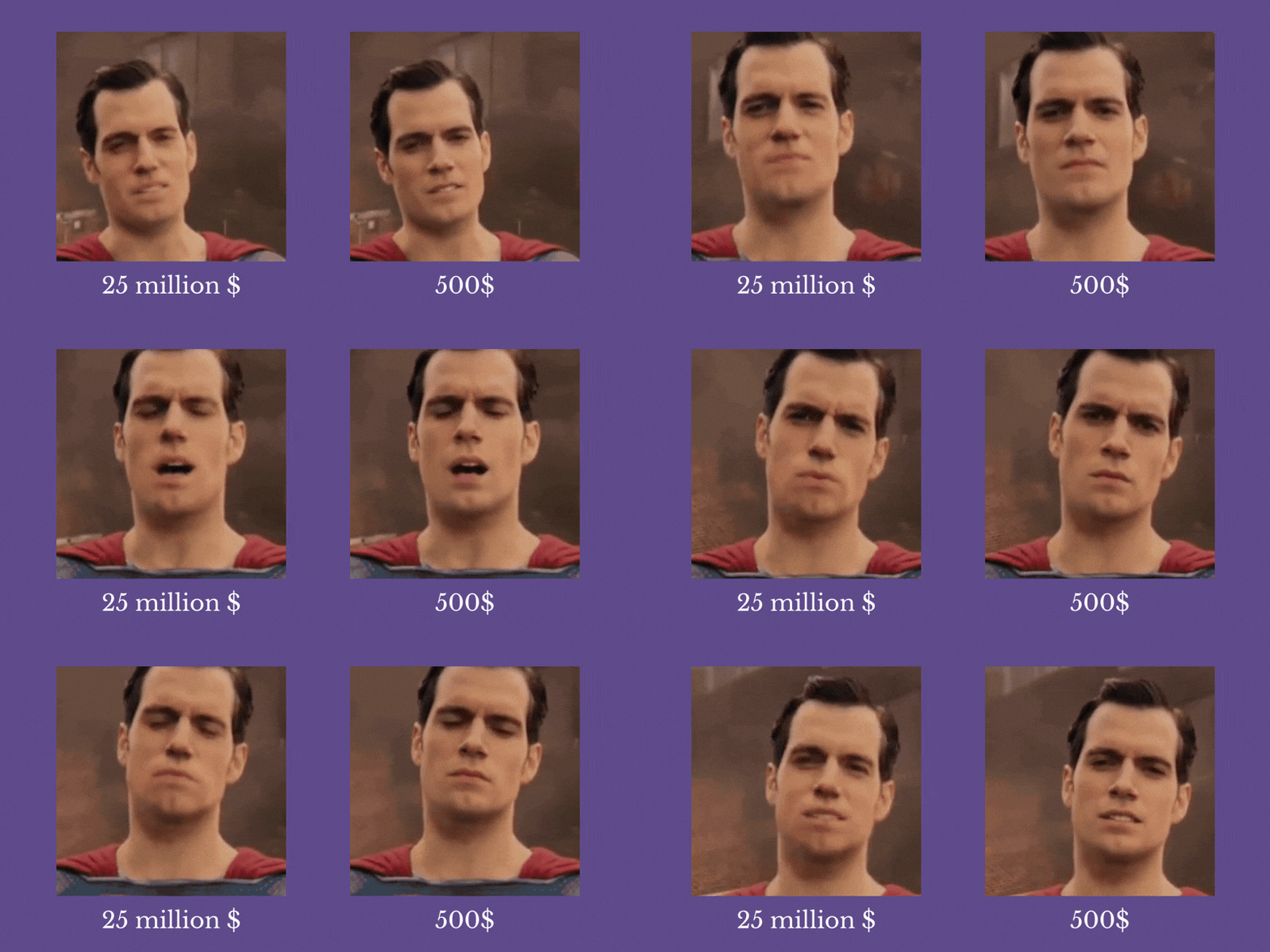
Of course that 25 million dollars represents quite a few jobs in CGI that I think are invaluable, and quite frankly, can’t be replaced by an AI. That’s because an AI doesn’t love superheroes the way some nerd who has spent their entire life studying to become a CGI artist and work on superhero movies does. But now that we can do 25 million dollars worth of CGI with 500 dollars worth of technology, where do you think the rest of the movie budget is going — to make the movie better? Or to pay the executives and top-billed talent?
Film#
Movie budgets keep getting bigger and bigger, but the distribution of the profits is creating a system where eventually, something will have to give. Of course, some of this is down to creative accounting, but eventually, a house of cards will topple, and I worry that AI may increase the speed at which this happens. AI could do this by writing stories that are less resonant, creating unappealing visuals with an uncanny valley feeling, and even just turning the audience off because they know it’s AI.
So, why is this an issue? Because we’re getting films (and even TV shows) that are less and less creative even though they cost more and more. 19 of the top 20 most expensive films of all time are sequels. Of course, some breakthrough releases surprise everyone and create a lot of chatter due to offering something completely new, but even before AI, as social media and other technological elements of our society have started to influence art, it has started to feel like everything looks great but has no meaning.
Now, how can AI help fix this? Smaller filmmakers who have worked hard to be intentional now also have access to tools that can increase the impact of their budget while respecting the team that they work with.
Intentionality might look like:
- Editing human-made CGI to improve it, not replace it.
- Using AI in the brainstorming process when stuck in a script.
- Using AI to help write contracts or organize your team’s schedule on a set.
- Training crew members using AI to learn more about their own craft, from lighting to sound to sewing costumes
Podcasting#
Some companies have felt the urge to develop AI-generated podcasts as a business line, to thunderous applause (not).
The Washington Post tried to roll out personalized AI podcasts in late 2024, but within 48 hours, they were struggling with huge amounts of disinformation, which damaged the reputation of the Post. This was critiqued by Bridget Todd and her producer on the podcast There Are No Girls on the Internet for being news-flavoured content without recognising the special considerations that journalism needs to adhere to. Basically, it’s not good.
AI podcasting costs about €1 per generated episode. Meanwhile, a well-produced human podcast episode costs between 1–4k. The cost per listen of AI podcasts ends up being way higher. So the cost of advertising through AI podcasts will be much higher. And subscribers probably don’t want to hear advertisements, anyway. So, where’s the end goal?
Now, how can AI help fix this? Smaller podcasters can use AI to help them automate the business tasks that drive up costs: invoicing, social media management, listener email filtering, and even helping with research. Use AI for the business part — keep the content human.
Additionally, you’re already seeing podcast publishers like iHeart put “Guaranteed Human” at the beginning of their episodes. This is a good way to indicate to viewers that you are a real person, even if AI is helping you manage your time.
Commercials#
No one loves commercials more than people who have worked in marketing, like me.
The thing about a good commercial is that it can actually have a huge impact on your business, not just in this quarter, but for years to come. I still remember some of my favourite commercials from childhood.
But commercials aren’t what they used to be. Now, they rely more on elements like celebrity endorsements than pure storytelling, making commercials more expensive but not necessarily more memorable.
In Europe, McDonald’s faced backlash this year for their AI commercial in the Netherlands, and ended up pulling the advert. Conversely, Intermarché, a French grocer, received an unprecedented international response to their Christmas advert, made with a team of 80 people over a year.
These are both examples of “big budget” commercials. But one was created with significantly less intentionality, and was significantly worse.
Some platitudes to keep in mind:
- A small ROI is better than no ROI
- Just because you can, doesn’t mean you should
Conclusion#
I don’t want to discourage people from using AI in their creative work completely. I run an AI consultancy, and it benefits me the more people who are interested in learning how to use AI.
However, we need to stop devaluing our audience’s experience by creating content that isn’t intentional, isn’t resonant, and doesn’t return a long-term ROI. Lots of people are seeing small successes in throwing AI Agents at content creation right now (with less success than a year ago, I’d argue, since the market is more saturated), but what happens when it’s every piece of content we’re fed?
What if we never have another Kurt Cobain?
If you’re interested in investigating how to use AI to support your intentional creative endeavours, please get in touch.